

Symptoms
Knee Pain
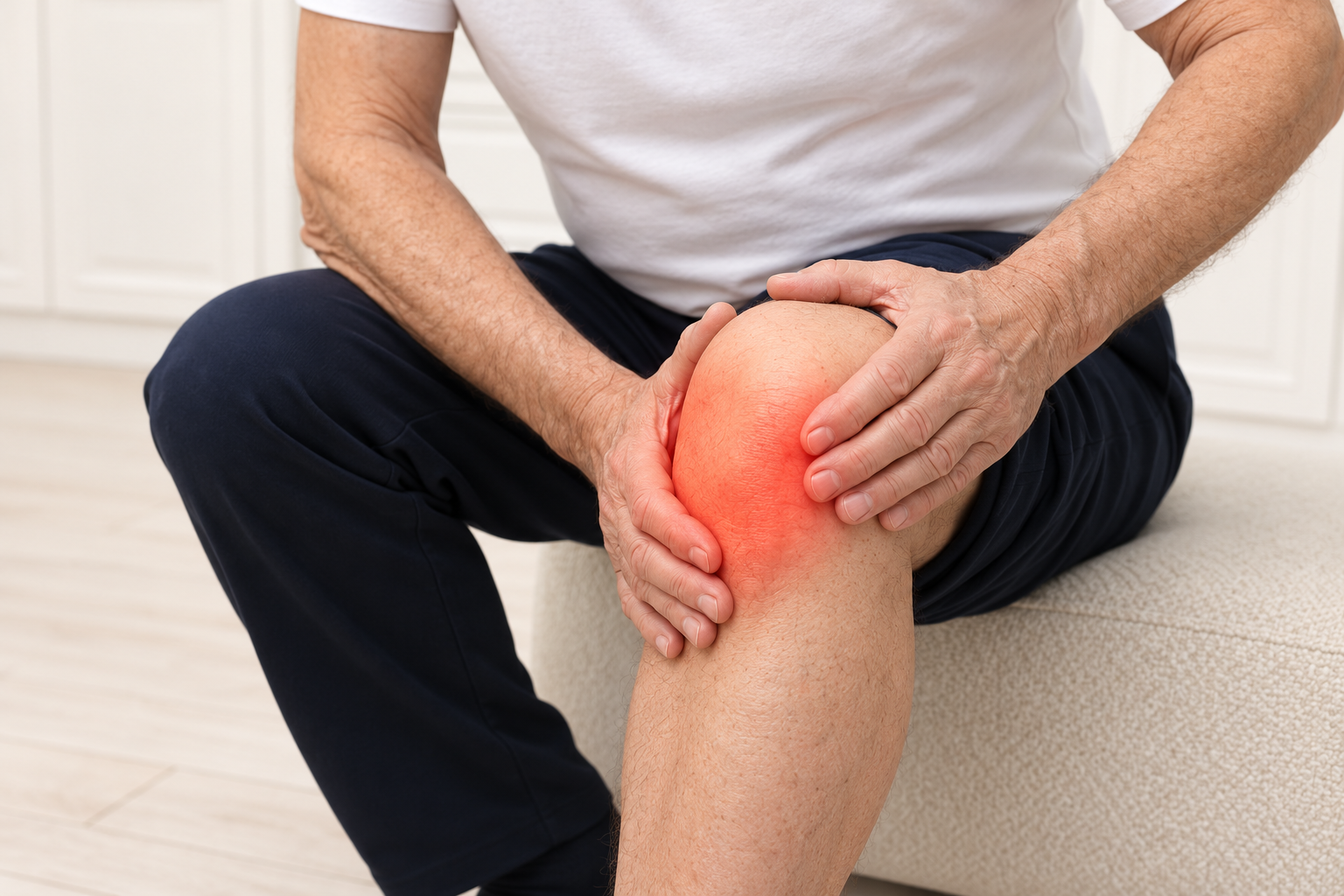
Knee pain does not always mean knee osteoarthritis. The location of the pain can point to different causes.
Step 1
Where does it hurt?
Get to know your symptoms
About Knee Pain
When people think of knee pain, osteoarthritis often comes to mind first. But knee pain has many causes. Treatment should therefore start by identifying which structure is causing it, not just checking whether the joint has worn down.
Common conditions
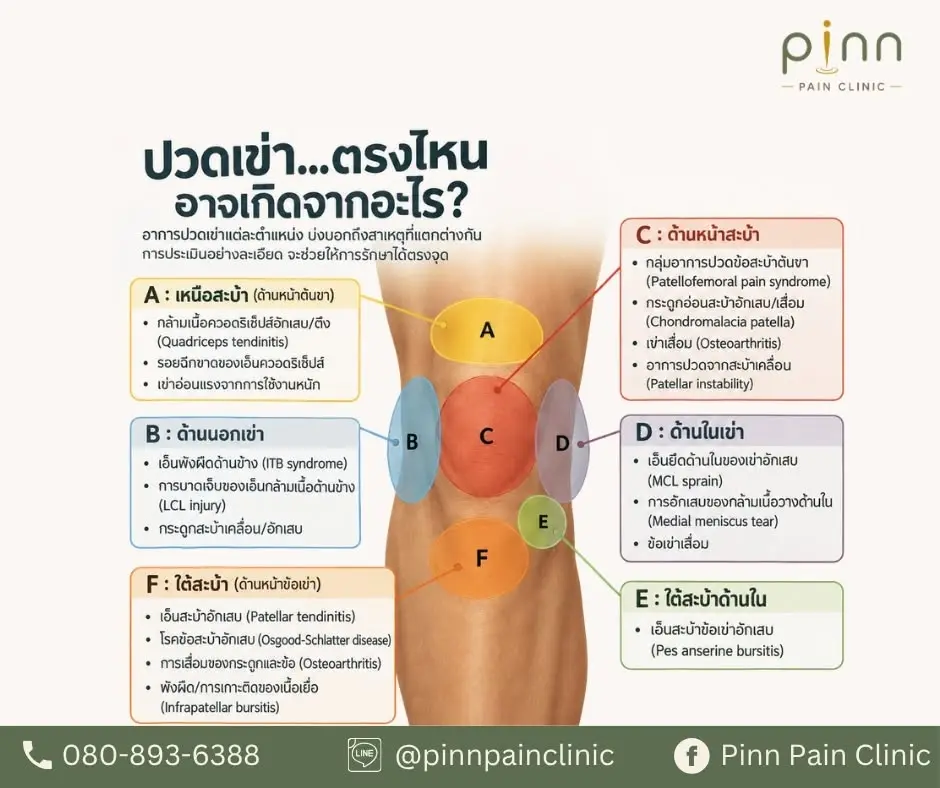
Pain at the front of the knee
May involve the kneecap, patellar tendon, or pain around the kneecap
Pain on the inner side
May involve an inner-knee ligament (MCL) or a bursa
Pain on the outer side
May involve the IT band or outer-knee ligament (LCL)
Pain below the kneecap
May involve the ACL, a bursa, or nearby tissue
Step 2
If you have these symptoms, see a doctor
If even one applies to you, get checked. You do not have to wait until you have them all.
- Pain lasting over two weeks
- A red, hot, swollen knee
- Limited ability to bend or straighten the knee
- Buckling or locking
- Night pain
ⓘ This information is general guidance and is not a diagnosis.
Why does it hurt?
Common causesof Knee Pain
Pain often has several causes. Knowing the cause can help you care for yourself and prevent the pain from returning.
Did you know? Most causes can be addressed by changing daily habits alongside treatment that targets the problem.
- Age-related changes
- Higher body weight
- Sports injury
- Repetitive loading, such as stairs or squatting
Step 3
Care at Pinn Pain Clinic
- Find the causewith ultrasound
- Choose the treatmentbest suited to you
- Perform procedureswith ultrasound guidance
Treat the underlying cause, not just the symptoms
2. Prolotherapy(Glucose Injection)
Stimulate the body's repair of tissues, joints, and tendons affected by degeneration or long-term injury, without surgery.
Lubrication and shock absorption
4. Hyaluronic Acid Injection
For people with knee or hip osteoarthritis or joint degeneration, this injection helps lubricate the joint, reduce friction, and improve movement.
Process
Your Care Journey at Pinn Pain Clinic
Make an appointment
Message @pinnpainclinic on LINE or call 080-893-6388.
Medical history and physical examination
By a rehabilitation medicine specialist.
Ultrasound examination
Pinpoint the cause of your pain.
Treatment plan
We explain your options and costsbefore starting treatment.
Procedure
Performed with ultrasound guidance to target the right area safely.
Follow-up
Advice on self-careand exercise.
Frequently Asked Questions
Questions about Knee Pain
Does knee pain always mean osteoarthritis?
Do I need an X-ray before coming in?
Can it be treated without surgery?
Can I walk right after an injection?
Read more
Articles by Our Doctors
16 Sep 2026
Knee Pain Does Not Always Mean Osteoarthritis
Knee pain can have many causes, and where it hurts can point to which structure is involved.

20 Aug 2026
Burning Pain After Shingles: Do Not Let It Become Chronic
If burning or stabbing pain stays after a shingles rash has healed, it may be postherpetic neuralgia, which can be treated.
15 Aug 2026
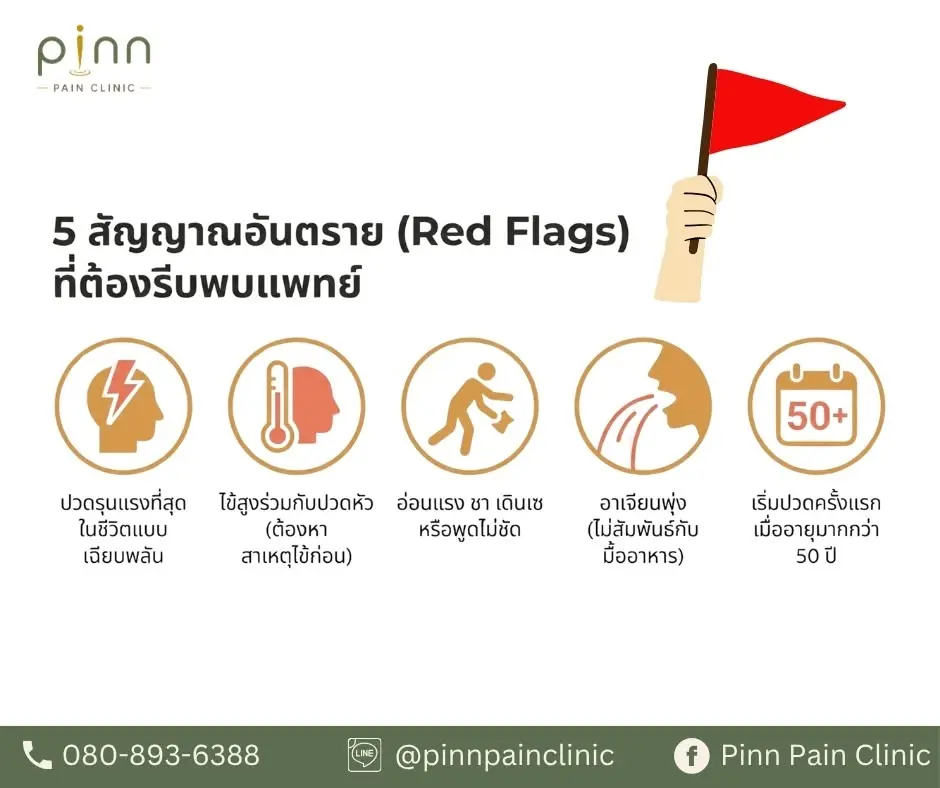
Which Headaches Need Urgent Medical Attention? Know the Red Flags
Headaches are common, but some warning signs mean you should see a doctor promptly to find the cause.
Contact Us
Where does it hurt? Talk to a specialist.
Make an appointment in advance on LINE or by phone. Convenient parking is available.
- Address 130 Moo 6, Thepharak Road, Bang Phli Yai, Bang Phli, Samut Prakan 10540, Thailand
- Opening hours Monday–Saturday, 9:00 a.m.–7:00 p.m. (Closed Sundays)
- Phone 080-893-6388
- Email pinnpainclinic@gmail.com
- Map Open in Google Maps