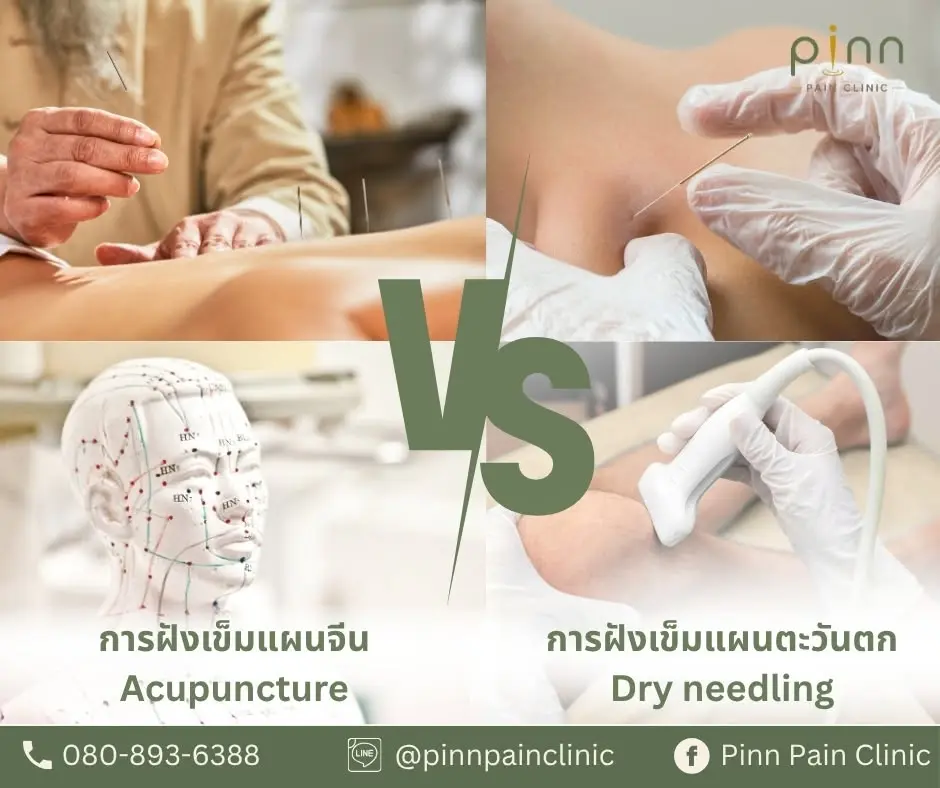
Both kinds of needling are popular because they are effective, have few side effects, and do not require long-term medication. But many people are still unsure how traditional Chinese acupuncture and Western dry needling differ.
Traditional Chinese Acupuncture
Traditional Chinese acupuncture has a history spanning thousands of years. It comes from the idea of qi, or life energy, flowing along paths called meridians. In this view, good qi flow keeps the body in balance; blocked flow may cause problems such as pain, fatigue, stress, or digestive trouble.
Needles are placed at acupuncture points along meridians to improve the flow of qi, balance yin and yang, and restore organ function according to traditional Chinese medicine.
Used for: headaches, migraines, insomnia, stress, chronic muscle pain, digestive balance, and hormonal problems.
Dry Needling
Dry needling uses fine needles similar to Chinese acupuncture, but it is based on Western science. It does not use qi or meridians. Instead, it targets tight or painful spots in muscles called trigger points.
A rehabilitation medicine doctor places the needle directly into the affected muscle to:
- Break down built-up scar tissue
- Help tight muscles relax
- Increase blood flow to the area
During treatment, you may feel a brief muscle twitch, called a local twitch response. This is a sign that the needle has stimulated the trigger point in the right place.
Used for: muscle pain in areas such as the neck, shoulders, and back; office syndrome; tight muscles from sports; and long-term muscle pain around the hips, waist, or knees.
Which should you choose?
Both approaches can be useful, but they are used differently. The choice depends on your condition and the doctor’s diagnosis.